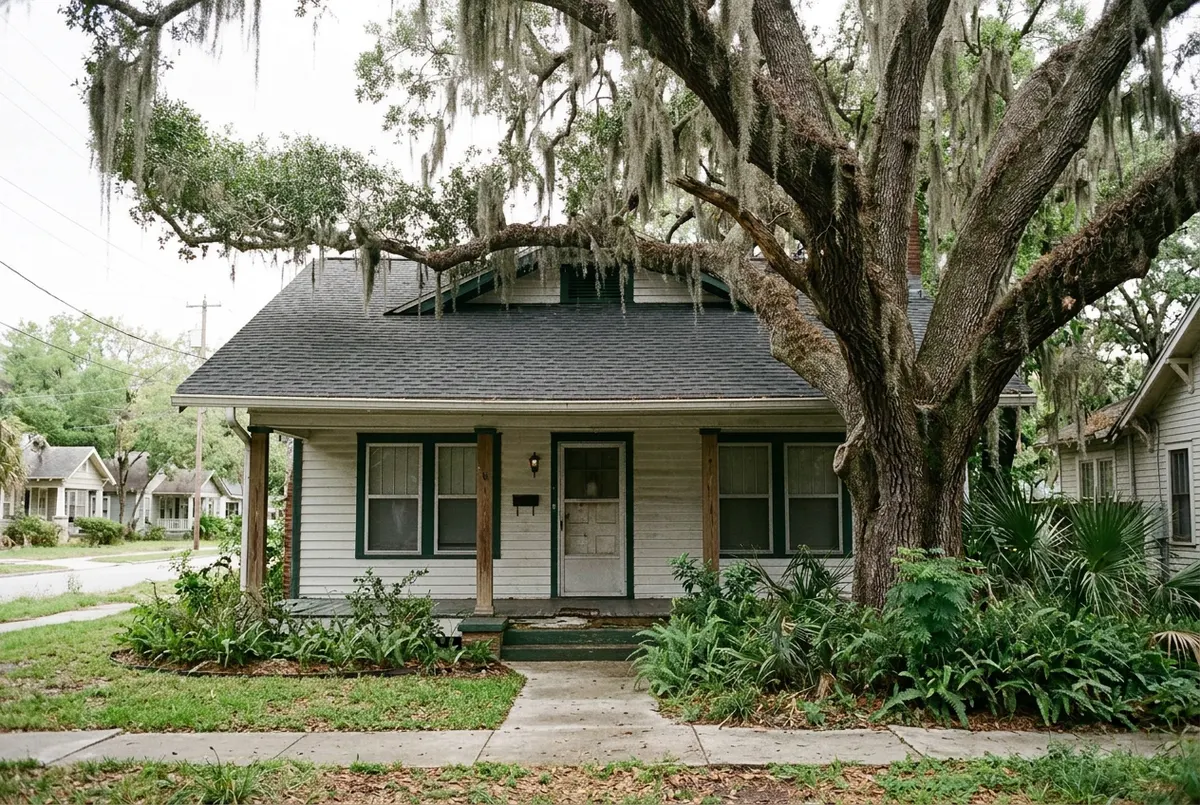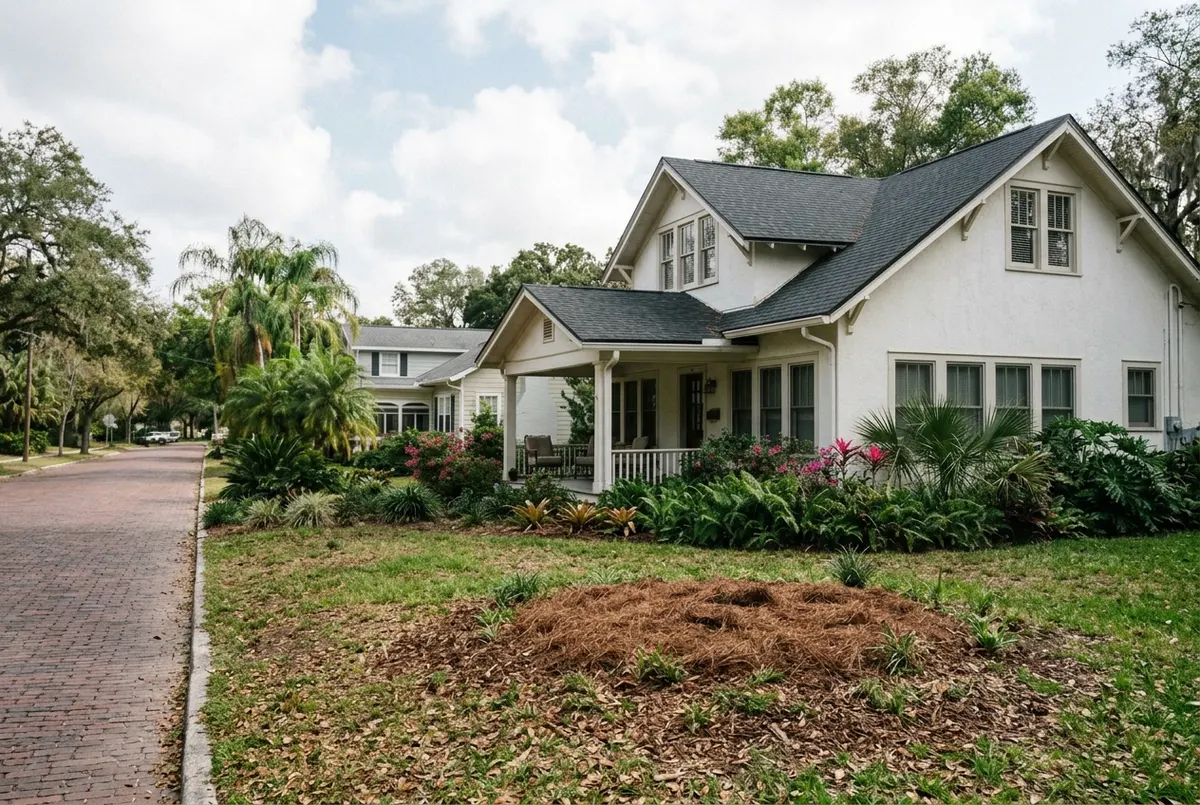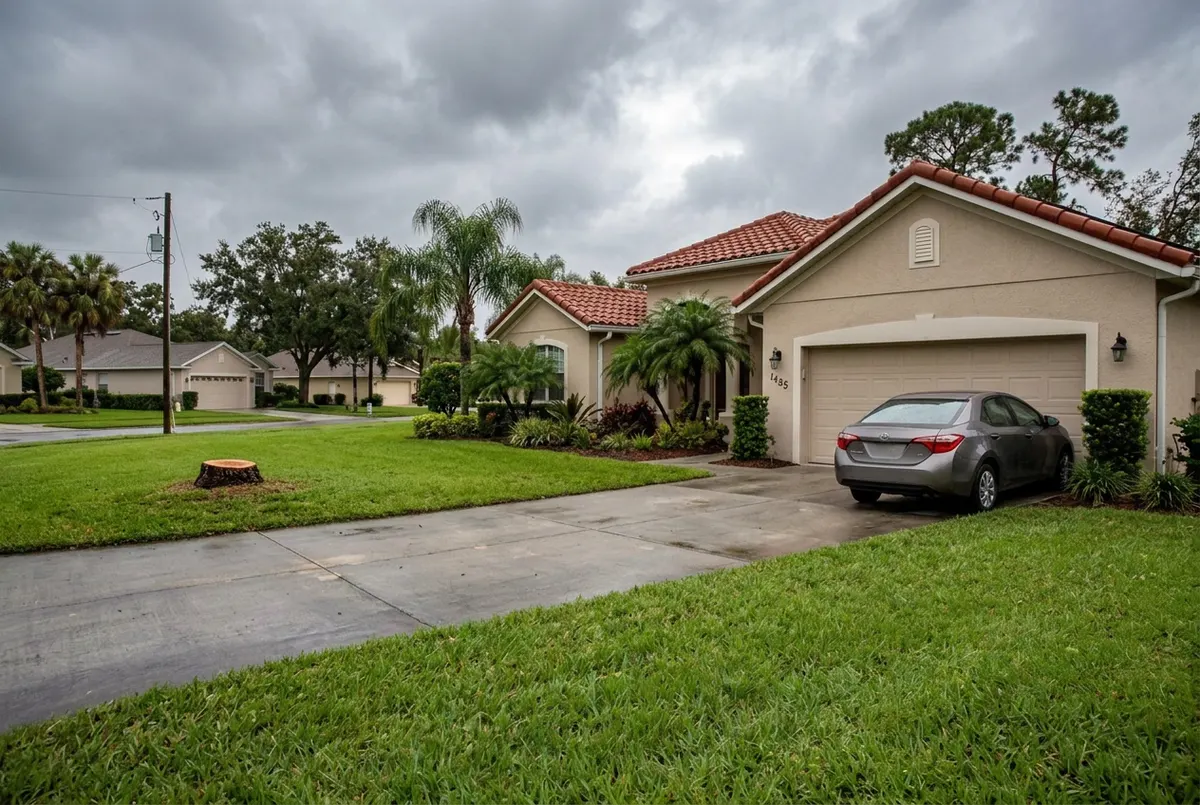
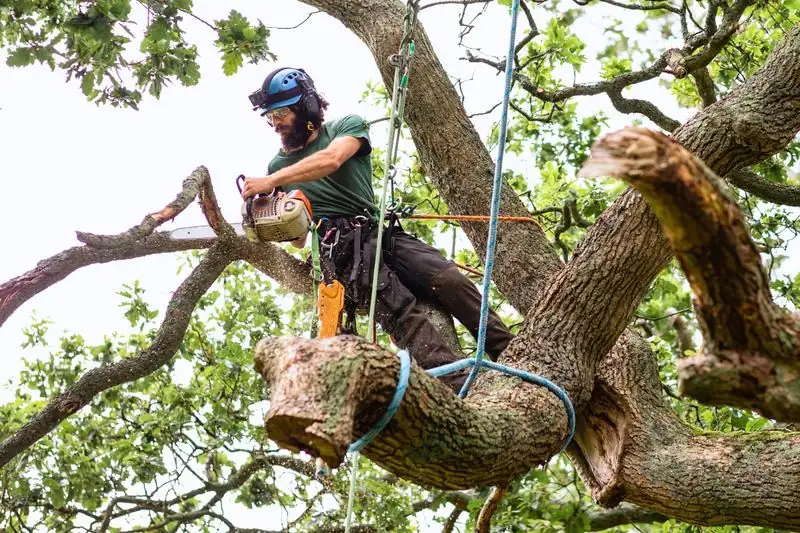
A big tree over the house tends to get one of two reactions. Some people want it gone before the next storm. Others want to keep it at almost any cost. Both instincts make sense, and both can be wrong. The right call depends on the tree's health, its structure, what it could hit, and what you want from your yard.
I've been making this call on Central Florida properties for more than twenty years. Here's the same thinking our arborists walk through on every estimate.
Start With the Tree, Not the Price
The first question isn't what's cheaper. It's whether the tree is sound. A healthy live oak with a few heavy limbs over the roof is a pruning job. A laurel oak with a hollow base and mushrooms growing from the roots is a removal, no matter how much shade it gives.
When we assess a tree, we look at:
- How much of the trunk and root flare is solid wood, and how much is decay or cavity
- Whether the main branch unions are strong or are splitting, with bark pinched inside the joint
- How much of the canopy is alive, and whether dieback is spreading from the top down
- Whether the tree has started to lean, and whether the soil is lifting on the opposite side
- The species and its age, since some Florida trees decline predictably as they get older
When Pruning Is the Right Answer
Good pruning fixes more problems than people expect. Removing dead wood, reducing the weight on long, heavy limbs, and thinning the crown so wind passes through can make a structurally sound tree much safer in a storm. Raising the canopy gets branches off the roof and away from the gutters without changing the character of the tree.
For a tree with one weak union but otherwise good health, cabling and bracing can help too. Steel cables or rods installed high in the crown share the load between limbs and reduce the chance of a split. It isn't a fix for a decayed or dying tree, but it can buy decades for a valuable one.
Topping is never the answer. Cutting a tree back to stubs doesn't make it safer. It invites decay and grows back as weak, crowded shoots that break off easily in wind.
When Removal Is the Right Answer
Removal makes sense when the risk outweighs what the tree gives back. We recommend it when:
- The trunk or root flare has significant decay, cavities, or fungal conks
- The tree is dead or more than half the canopy has died back
- A lean has developed or worsened recently, especially after a storm
- Roots are lifting a foundation, slab, or pool deck and cannot be pruned without destabilizing the tree
- The species is prone to failure and the tree is mature and close to the house
Pines killed by bark beetles or lightning, and palms with Ganoderma butt rot, also fall in this category. There's no treatment that brings them back, and they get more brittle every month they stand.
Comparing Cost and Risk
In Central Florida, trimming typically runs $250 to $1,600 per tree, depending on size, access, and how much work the canopy needs. Removal usually runs $450 to $3,000 or more, and the top end rises when a large tree sits over a structure and needs rigging or a crane. Stump grinding is extra if you want the stump gone.
Pruning is cheaper today, but a healthy tree needs it again every three to five years. Removal costs more once, then it's done. The bigger cost to weigh is the one you hope never to pay: a large tree on a roof can mean a repair bill many times higher than either option, and some insurers push back on claims when a visibly hazardous tree was left standing.
What We Recommend
Get an assessment from a certified arborist before you decide, and be wary of anyone who only offers one answer. A crew that only does removals will tend to recommend removals. We'd rather prune a tree that can be saved than cut down a healthy one, and we'll tell you plainly when a tree has run out of time.
Our estimates are free and written, and they cover both options when both are reasonable, so you can compare the price and the risk side by side before anyone starts a saw.